Coffee Retro Wavy SVG: A Designer’s Review
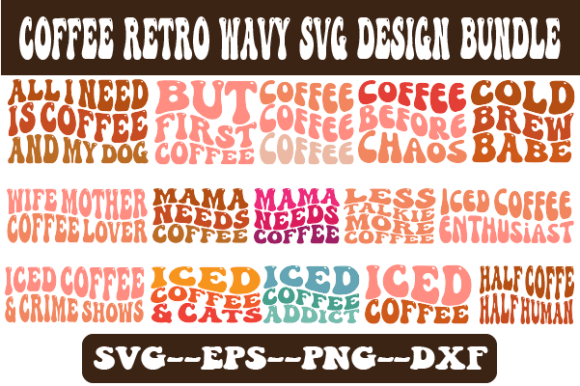
As a designer who spends half my life digitizing and the other half stitching, I have learned to look past the glossy preview images. When I first encountered the Coffee Retro Wavy Svg Design Bundle, my initial reaction was not just about the aesthetic appeal, though the retro wavy typography is undeniably charming. My mind immediately went to the mechanics of production. How does this translate from a flat digital graphic into a tactile, stitched reality? For those of us running small shops or creating handmade products for Etsy, the difference between a pretty picture and a sellable product lies in the details of execution.
The Visual Mood and First Impressions
The design captures that specific mid-century modern nostalgia that has become a staple in contemporary cafe culture and home decor. The wavy lines suggest movement and warmth, perfectly complementing the coffee theme. From a Graphics perspective, the layout is balanced, avoiding the clutter that often plagues bundle packs. However, as an embroidery reviewer, I see potential pitfalls. The curves are smooth, which is excellent for machine flow, but the thickness of the waves needs careful consideration when scaling down. If you are planning to use this for a small embroidered patch or a baby item, the visual weight of the design must be reduced without losing its character.
Real-World Application: The Tote Bag Test
To truly evaluate the Coffee Retro Wavy Svg Design Bundle, I imagined a common scenario: a custom order for a local boutique needing branded tote bags. Cotton canvas is unforgiving; it shows every gap in stitch coverage and every pull in the fabric. Using this design for a tote bag requires a robust approach. The retro waves would likely need to be filled with a dense satin stitch or a tight fill stitch to ensure the text remains legible against the textured weave of the canvas. If the original files are intended primarily for sublimation, as suggested by the description mentioning "Printable Sublimation Design," we must adapt our strategy. Sublimation relies on ink penetration, while embroidery relies on thread buildup. You cannot simply import a DXF or EPS file meant for cutting or printing and expect it to stitch out perfectly without digitizing adjustments.
Navigating Fabric and Technique Challenges
One of the critical aspects of using any design bundle in commercial embroidery is understanding material compatibility. The Coffee Retro Wavy Svg Design Bundle features elements that could pose challenges on stretchy fabrics like jersey t-shirts or sweatshirts. Without proper stabilization, the wavy lines might distort after washing. I always recommend testing such designs on scrap fabric first. Check the stitch density. If the design is too dense for a lightweight tee, it will pucker. If it is too sparse for a heavy hoodie, it will look cheap.
For dark fabrics, thread color contrast becomes paramount. A retro coffee design often utilizes browns, creams, and muted oranges. On a navy or black garment, you might need to adjust your thread colors to brighter tones to maintain visibility, or add a white underlay if you are digitizing it yourself. Remember, the provided files are 20 DXF and 20 EPS formats. These are vector graphics, typically used for cutting machines or print design, not native embroidery formats like PES or DST. This means you, the creator, are responsible for the digitization process or hiring a digitizer. This is a crucial distinction for buyers expecting plug-and-play embroidery files.
Commercial Viability and Product Value
Why does this matter for your craft business? Because perceived value drives sales. A well-executed embroidery project signals quality. When a customer buys a personalized gift, such as a mug wrap or a pillow cover featuring this coffee motif, they are buying into a lifestyle. The Coffee Retro Wavy Svg Design Bundle offers a trendy aesthetic that resonates with current market trends. However, the finish determines whether that customer returns. Sloppy stitching on curved surfaces, like caps or mugs (if using specialized embroidery attachments), can ruin the effect. The wavy nature of the design means you must pay attention to hoop size and placement. Centering is key. Off-center waves look like mistakes, not style choices.
For Etsy sellers and small shop owners, versatility is king. This bundle allows for cross-promotion. You can use the same design concept for sublimation on mugs and pillows, as noted in the product description, and then offer an embroidered version on aprons or tea towels. This creates a cohesive brand identity. But always verify licensing. Just because you have the SVG files does not automatically grant unlimited commercial rights for every possible application, especially if you are modifying the design significantly. Always read the specific license terms provided by the creator.
Practical Notes for the Embroidery Designer
- Test on Scrap: Never run a new design on final product fabric. Use similar weight and texture scraps to test tension and density.
- Check Contrast: View your design in black and white. If the details disappear, your thread color choice needs adjustment.
- Stabilizer Selection: For stretchy fabrics like sweatshirt material, use a cut-away stabilizer. For woven cottons like tote bags, a tear-away may suffice, but hooping stability is critical for the wavy lines.
- Scale Appropriately: Ensure the design fits your hoop size. Do not try to squeeze a large design into a 4x4 hoop if it compromises the integrity of the waves.
- Digitizing Awareness: Since these are DXF/EPS files, remember that you are working with vector shapes. Convert these into stitch paths carefully, paying attention to directionality to prevent thread breaks on sharp turns.
Final Verdict for Crafters
The Coffee Retro Wavy Svg Design Bundle is a strong asset for creators who understand the bridge between graphic design and textile art. It is not a magic bullet for instant embroidery success, but rather a high-quality starting point for those willing to put in the technical work. For sublimation users, it is ready to go. For embroiderers, it requires translation. But that translation, when done with care, results in a finished product that stands out in a crowded marketplace. Whether you are making holiday gifts, boutique merchandise, or custom apparel, this design holds up under scrutiny, provided you respect the materials and the machine. Keep your needles sharp, your tension balanced, and your creative vision clear.