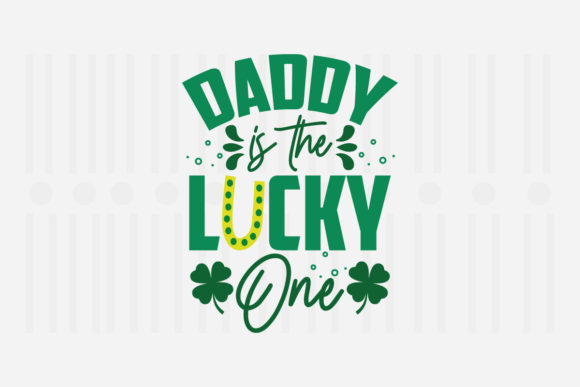
Review: Daddy is the Lucky One St. Patrick’s SVG
As a designer who spends half my life digitizing and the other half stitching, I have learned that not every cute graphic translates well to thread. When I first pulled up Daddy is the Lucky One,St. Patrick s Svg, my initial reaction was cautious optimism. The phrase itself carries a playful, affectionate weight perfect for the holiday, but the execution determines whether it ends up as a cherished heirloom or a puckered mess on a client’s shirt. This review breaks down how this specific design asset performs when moved from the screen to the sewing machine.
First Impressions and Visual Personality
The mood of this piece is lighthearted and familial. It captures that specific niche of St. Patrick’s Day marketing that moves away from generic shamrocks and into personalized family dynamics. Visually, the layout feels balanced, though as an embroidery specialist, I immediately look past the flat vector lines to imagine the stitch paths. The typography appears bold enough to hold its own, which is crucial. Thin, wispy fonts often disappear into fabric texture or break under the tension of the needle. Here, the letterforms suggest a solidity that should translate well into satin or fill stitches, provided the digitizer has done their job correctly.
For those of us in the Crafts and Graphics space, having a source file that allows for easy color changes is a significant advantage. The description notes that the design is 100% color changeable. In practice, this means I can adapt the text to match specific brand colors for a boutique client or switch to traditional green and gold for a standard holiday release without losing the integrity of the shapes.
Real-World Application: The Custom Sweatshirt Test
To truly evaluate Daddy is the Lucky One,St. Patrick s Svg, I mentally placed it on a mid-weight cotton blend sweatshirt. This is a common request for small shop products and Etsy sellers during the spring season. On a curved surface like a chest or back panel, the design needs to breathe. If the stitch density is too high, the fabric will pull and distort, ruining the silhouette of the garment.
I envision this working beautifully as a central chest piece on a dad’s hoodie or as a smaller left-chest logo on a matching toddler tee. The "lucky one" narrative suggests a gift from a partner or child, making it a strong contender for personalized gift collections. When stitched on a dark navy or forest green fabric, the contrast must be sharp. I recommend testing the design in black and white mockups first to ensure the legibility holds up without relying solely on color differentiation. If the details rely on subtle shading, they may get lost in the thread texture.
Versatility Across Product Lines
Beyond apparel, this design has potential in home decor and accessories. Consider a heavy canvas tote bag design. The sturdy weave of canvas can handle higher stitch densities, allowing for a crisper finish on the lettering. It could also work as an embroidered patch, where the backing stabilizes the stitches completely, removing the risk of fabric distortion. For baby embroidery, such as a onesie or burp cloth, caution is required. The fabric is delicate, and the skin is sensitive. Ensure the back of the stitching is clean, with no scratchy jump stitches or excessive trim tails.
For digital product sellers, this SVG serves as a versatile asset. It can be used for printable mockups to showcase how the final embroidered product might look, helping customers visualize the finished product before purchasing. This increases buyer engagement and trust, as they can see the design applied to realistic textures rather than just floating in white space.
Technical Considerations for Embroiderers
While the visual appeal is strong, the technical execution requires attention. Since the product description mentions source files like EPS, it is primarily a vector graphic intended for printing or cutting, but many users adapt these for embroidery. If you are converting this SVG into a machine embroidery design yourself, pay close attention to the corners of the letters. Sharp angles in vectors often need to be rounded slightly in digitizing to prevent thread breaks and bird nests.
- Stabilizer Selection: Always use a cut-away stabilizer for stretchy fabrics like t-shirts and sweatshirts to prevent long-term distortion. For woven fabrics like aprons or tea towels, a tear-away may suffice if the stitch density is low.
- Thread Colors: Test your thread palette against the fabric. Metallic gold threads can be tricky; they are prone to breaking and may require a slower machine speed. If using metallics for the "lucky" element, consider using a polyester rayon blend for the main text to reduce tension issues.
- Hoop Size: Confirm the dimensions of the design before hooping. If the phrase is long, it might require a 5x7 or larger hoop. Trying to squeeze a large design into a 4x4 hoop can lead to edge hits and misalignment.
Where to Use Caution
Not every project is a good fit. Avoid placing this design on highly textured fabrics like thick wool or bouclé, where the fine details of the lettering might sink into the pile. Similarly, be wary of using it on very thin, silky fabrics without proper topping. The stitch density needed to make the text readable might be too heavy for delicate materials, causing visible puckering even with stabilizer.
For caps and hats, the curved surface presents a challenge. The design must be centered perfectly, and the height of the letters should not exceed the available space between the seam and the brim. A distorted "Daddy" looks unprofessional and can hurt brand consistency for commercial embroidery projects.
Final Verdict for Craft Business Owners
Daddy is the Lucky One,St. Patrick s Svg is a solid choice for designers looking to add a personal touch to their holiday lineup. It moves beyond cliché imagery to offer a narrative that resonates with buyers looking for meaningful, funny, or sweet gifts. For the Etsy seller or small business owner, it offers flexibility in color and application.
However, remember that an SVG is not a ready-to-stitch embroidery file unless specified. You must ensure you have the correct digitized version or convert it properly, checking for stitch count and density. Always run a test stitch on scrap fabric identical to your final product. Check the tension, inspect the small details for clarity, and ensure the finished product meets your quality standards. When used wisely, this design can elevate your handmade product line, offering a professional, polished look that encourages repeat customers and positive reviews.
By treating this graphic as a starting point for thoughtful creation rather than a plug-and-play solution, you ensure that every stitch adds value to your craft business. Whether it ends up on a mug via sublimation or a shirt via needle and thread, the key is in the preparation and the respect for the material.